
What are stem cells
Stem cells are unique types of cells. They can divide themselves an infinite number of times, but they can also change into other types of cells. There are many different types of stem cells. When we refer to stem cells on our website, we mean the type of stem cells that form blood. These are also known as blood stem cells.
Page content
Blood cells
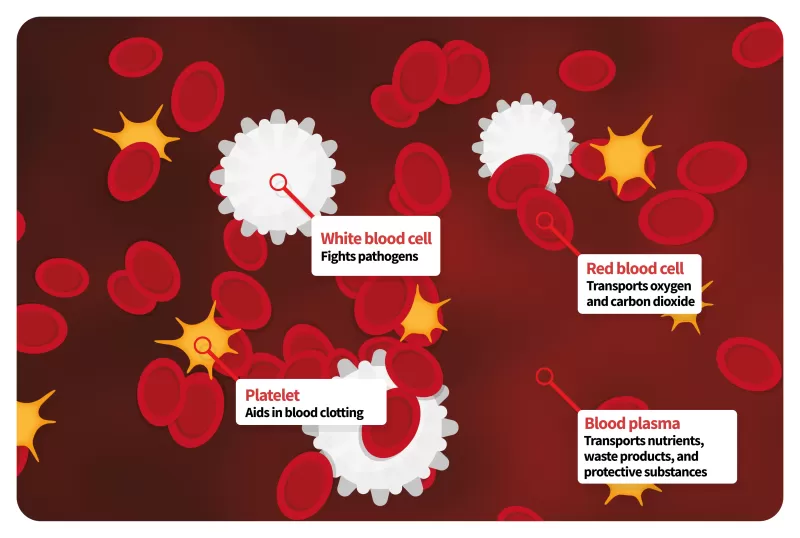
In your body, stem cells basically function as tiny blood manufacturing plants. Stem cells are located in the bone marrow. Bone marrow is a soft, spongy tissue found in the central cavities of various bones in the body. The stem cells in your bone marrow produce all the various types of blood cells, including platelets and white and red blood cells
- Red blood cells transport oxygen to every part of the body with the help of hemoglobin, which binds to oxygen.
- White blood cells defend the body against foreign substances and intruders and help to remove dead cells from the body.
- Platelets play an important role in the blood clotting process.
As you read these words, your stem cells are hard at work producing new cells. This process continues, day in and day out. Every minute, around 350 million platelets and red and white blood cells are produced. After a stem cell donation, your body will replenish its supply of stem cells within a short period of time.
Function
Stem cells serve two important functions:
- Maintaining the number of blood cells in your body
- Producing additional blood cells in case of an infection or bleeding
As a stem cell donor, you only donate blood stem cells. Your body is constantly replacing these blood stem cells, so you can easily do without a few and you will have new ones in no time.
What do the stem cells do in the patient's body?
When someone has a serious blood disease, e.g. leukemia, their body's production of healthy blood cells is compromised. Our body needs healthy blood cells to transport oxygen, combat infections and prevent bleeding. The compromised production of blood cells puts a patient in a life-threatening situation. During a stem cell transplantation, a patient is given functional stem cells that will start producing new and healthy blood cells in their body.
Immune system
Before a patient can undergo a stem cell transplantation, their own immune system must first be ‘deactivated’. This is done by treating the patient with a dose of chemotherapy and radiotherapy high enough to irreparably damage their bone marrow. Without this treatment, a patient's immune system will attack and destroy the donor cells, which means the transplantation fails.
The donated stem cells are administered intravenously and will move to the patient's bone marrow on their own. Once there, they will start to multiply and later begin producing healthy blood cells. It takes around two weeks before it can be determined in a laboratory that the new stem cells are successfully doing their job.
Healing
Besides producing new stem cells and blood cells, the donor cells can also identify sick cells. When donor cells identify sick cells, they can destroy them and give the patient a chance to make a full recovery from their disease.
Research
These days, you often hear about stem cells in the news because it is believed they can contribute to the repair of sick or damaged organs. At Matchis Caribbean, our sole focus is the process of donating blood stem cells to patients. Here at Matchis Caribbean, we do not conduct stem cell research.